Metal-Free Zirconia Implants: What the Research Shows for Atherton Patients
· Carlmont Dental Care
A look at what the research so far shows about zirconia (metal-free) dental implants, how they compare to titanium, and who tends to be a good candidate.
Metal-free zirconia dental implants are a legitimate, well-researched option with strong esthetic and soft-tissue advantages, and research so far suggests peri-implantitis rates around zirconia implants tend to be low in the first several years after placement. Titanium implants still carry the deepest long-term track record, with survival commonly cited in the mid-90s percent range or higher at ten years and beyond, so the choice between the two usually comes down to esthetics, gum biology, and bone quality rather than one material being objectively "better." This is a question we hear often from patients driving in from Atherton who want a tooth-colored option but also want to know the evidence actually holds up.
What Makes an Implant "Metal-Free"?
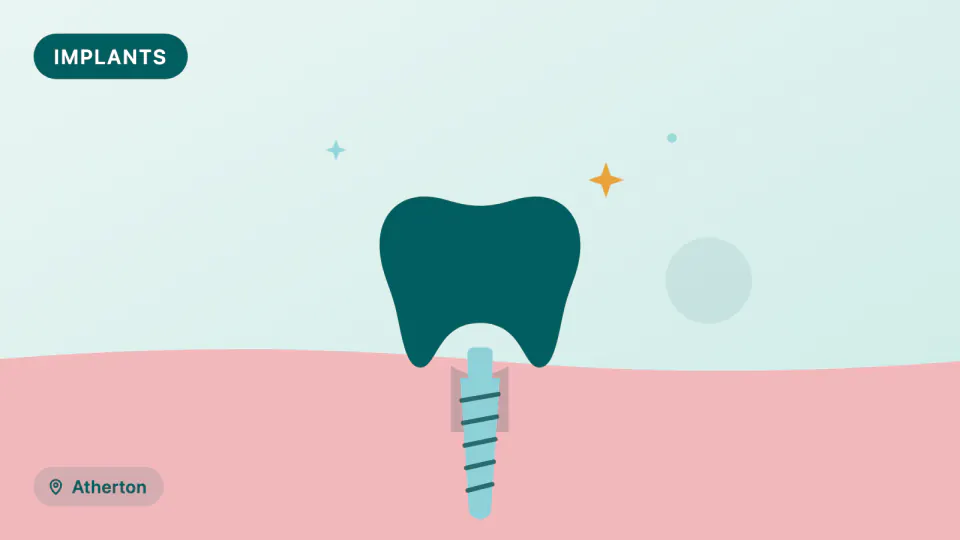
Traditional implants are made of titanium, a metal that has been used in dentistry and orthopedics for decades because it fuses reliably with bone. Zirconia implants use a dense ceramic material instead. There's no gray metal collar to potentially show through thin gum tissue, which matters most in the front of the mouth or in patients with a naturally thin gingival biotype. Zirconia also tends to attract less plaque along the implant surface, which is part of why researchers have been studying whether it produces healthier, calmer gum tissue around the implant over time.
What the Research Shows So Far
Research on peri-implantitis (a gum and bone infection around an implant) specifically around zirconia implants generally points to low prevalence in the short-to-mid-term, though a few longer-follow-up studies have reported higher rates than the shorter studies did. This body of research has real limitations worth knowing about. First, studies haven't used consistent criteria for diagnosing peri-implantitis, which makes it harder to compare results across research groups. Second, there still aren't enough large, long-term studies that directly compare zirconia against titanium head-to-head over ten-plus years, which is the benchmark titanium already has. On the specific question of whether one material has a higher peri-implantitis rate than the other, current evidence does not clearly favor one material over the other on this measure.
Put plainly: zirconia's early and mid-term numbers look reassuring, but the evidence base is still maturing. Titanium's advantage isn't that it's biologically superior — it's that it has decades more follow-up data behind it, including studies tracking implants well past the ten-year mark with cumulative survival commonly reported in the mid-90s percent range or higher.
Zirconia vs. Titanium: What Actually Should Drive the Decision
Neither material is a universal "upgrade" over the other. Some points worth weighing with your dentist:
- Esthetics: Zirconia's white color is a genuine advantage for front-tooth replacements, especially with thin gums or a high smile line.
- Bone integration speed: Titanium generally integrates with bone a bit faster and has more flexibility under bite forces, which matters for back-tooth implants carrying heavier chewing loads.
- Design differences: Some zirconia implant designs, particularly narrower ones, have shown lower survival rates than comparable titanium designs — implant selection and technique matter as much as the material itself.
- Bone quality and gum biology: Patients with thinner bone, active gum disease history, or heavy grinding habits need an individualized recommendation rather than a default to either material.
This is exactly the kind of case-by-case judgment call that's hard to make from a website. It's a big part of why we encourage an in-person consultation, and it's also the reasoning behind our best dentist in Atherton, CA page for patients trying to find a Belmont-area practice that can walk through both options honestly.
What Atherton Patients Usually Ask
Our office sits at 2100 Carlmont Drive in Belmont, about 15 to 18 minutes north of Atherton via Highway 101 or El Camino Real depending on traffic, which makes it a manageable trip for a consultation or follow-up visit. We regularly see patients from West Atherton, Lindenwood, and the Lloyden Park area asking specifically about zirconia because they've read about it online and want a straight answer about whether the hype matches the research — and, as above, it mostly does, with the caveat that the long-term comparative data is still catching up to titanium's.
For patients in Atherton weighing a metal-free implant, the most useful next step is usually a 3D scan and a conversation about bone volume, gum thickness, and where in the mouth the implant is going, since those factors matter more than the material alone.
Common questions about zirconia dental implants
Q: Is zirconia actually metal-free?
Yes. Zirconia is a ceramic (zirconium dioxide), not a metal alloy, which is why it's marketed as a metal-free option for patients with a preference for non-metal materials.
Q: Are zirconia implants more expensive than titanium?
Costs vary by case complexity, the number of implants needed, and lab fees for the ceramic components. We provide a written estimate after a consultation and offer in-house membership plans and 0% APR financing through CareCredit or Proceed Finance to help spread out the investment.
Q: Do zirconia implants fail more often than titanium?
Current evidence doesn't clearly show a difference in overall complication rates between the two materials, though some specific zirconia implant designs have shown lower survival than titanium counterparts, which is why implant selection matters.
Q: Who is a good candidate for zirconia implants?
Patients with a single missing front tooth, adequate bone volume, healthy gums, and a clear esthetic reason to avoid a metal collar tend to be the strongest candidates. Heavier bite forces or compromised bone may steer the recommendation toward titanium instead.
Q: How long do zirconia implants last?
Short-to-mid-term data (several years) looks favorable, but the long-term dataset — ten-plus years — is still smaller than what exists for titanium, so "comparable long-term survival" is an accurate description, not a guarantee, at this point.
If you're in Atherton, San Carlos, San Mateo, or anywhere else in San Mateo County and want to talk through whether a metal-free implant makes sense for your case, our team at Carlmont Dental Care is happy to walk through the options, including titanium, at a consultation. Call us at (650) 591-1984 or visit carlmontdentalcare.com to schedule.
From our patients
★★★★★“Dr Jiang took over the practice from a corporate group that previously ran it. The corporate group was after money. I had three different dentists in three visits and the dentists didn't seem that interested. Dr Jiang is a breath of fresh air. I have had teeth cleanings, cavities filled, a crown and and an implant.”
★★★★★“Great people! Everyone smiled and made me feel good about coming here for my dental needs. Nancy helped me remove the Invisalign attachments, the whole process really felt like a family dental care, were very personable and caring, and worked with me as best they can to plan and resolve my crown problem.”