Tissue-Level vs Bone-Level Implants: Which Protects Gums Better?
· Carlmont Dental Care
A 2025 meta-analysis compared tissue-level and bone-level implant designs for gum-disease risk. Here's what the data shows, and what actually matters more for long-term success.
A 2025 review pooling five studies and over 500 implants found that tissue-level implants had a numerically lower rate of peri-implantitis (gum disease around an implant) and implant failure compared to bone-level implants, but the difference did not reach statistical significance. In plain terms: there's an early hint that the collar design may matter, but it's not proven, and how well an implant is placed and maintained still outweighs which design is chosen.
What's the Difference Between Tissue-Level and Bone-Level Implants?
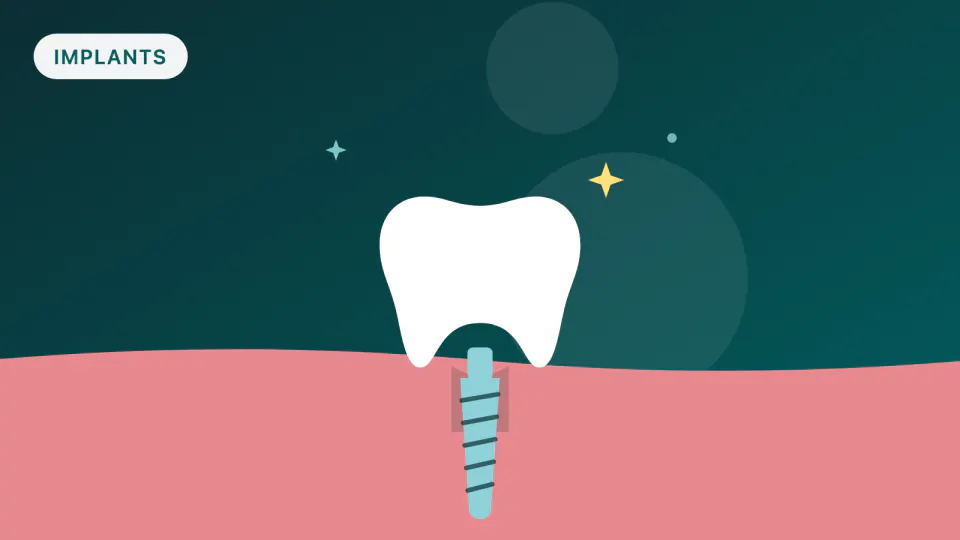
Both are titanium posts that replace a tooth root, but they're shaped differently where they meet the gum.
- Tissue-level implants have a smooth, polished collar built into the implant itself that sits up in the gum tissue, above the bone. The connection point for the crown is above the gumline, and the same polished surface stays in place for the life of the implant.
- Bone-level implants are placed at or slightly below the crest of the bone, and a separate abutment (connector piece) is attached afterward to bring the connection up through the gum. That abutment is often removed and reattached during the restoration process.
Bone-level designs have become more common in recent years because they allow more flexibility with the angle and depth of the crown, which can help with esthetics in the front of the mouth. Tissue-level designs are often favored in back teeth or in patients where a simpler, one-piece healing profile is preferred.
Does the Design Actually Change Gum-Disease Risk?
This is the question a 2025 systematic review and meta-analysis set out to answer. Researchers pooled five studies covering 501 implants in 241 patients, tracked over one to five years, and compared rates of peri-implantitis and implant failure between the two designs.
The results: tissue-level implants trended toward fewer cases of peri-implantitis and fewer failures than bone-level implants. However, when the researchers ran the statistics, that difference was not statistically significant, meaning it could reflect a real (if modest) advantage, or it could be due to chance given the relatively small number of studies and implants available. The authors' own conclusion was that the two designs have comparable survival and gum-health outcomes over the follow-up periods studied.
That's an important distinction for patients to understand: "numerically lower" is not the same as "proven better." This is genuinely early research, and the data is still maturing. If your dentist at Carlmont Dental Care discusses implant options with you, this is the kind of nuance worth asking about directly.
Why Might Collar Position Matter for Cleaning?
The theory behind the finding has to do with where plaque tends to collect and how often the gum seal around the implant gets disturbed.
- A tissue-level implant's polished collar sits in the same spot in the gum for the entire life of the implant. Because there's no repeated disconnecting and reconnecting of a separate abutment during the restoration process, the soft-tissue attachment around the implant may stay undisturbed, which some researchers believe helps maintain a healthier seal against bacteria.
- A bone-level implant's abutment connection sits closer to, or below, the bone and gum crest. Depending on the specific system and how the crown is fitted, that junction can be a spot where plaque collects and where the gum attachment is more likely to be disrupted during fabrication of the final restoration.
This is a reasonable biological explanation for why the trend leans toward tissue-level implants in the review, but it remains a hypothesis supported by early, limited data, not a settled clinical rule.
What Matters More Than Which Design You Choose
Even the researchers behind the 2025 review were careful to frame their findings this way: design is one variable among many, and probably not the biggest one. Factors that consistently show a bigger effect on long-term implant and gum health include:
- Surgeon experience and planning — precise 3D positioning, adequate bone volume, and appropriate case selection matter more than which implant system is used.
- Implant site — bone quality and quantity, gum tissue thickness, and location in the mouth all influence healing and long-term stability.
- Home care and maintenance — consistent brushing, interdental cleaning, and regular professional cleanings and checkups are the strongest predictors of whether an implant stays healthy for decades.
For patients in Belmont, San Carlos, San Mateo, and the rest of San Mateo County, the practical takeaway is the same regardless of which implant design ends up being recommended: a well-planned implant, placed by an experienced clinician, and properly maintained afterward, is far more likely to succeed than the collar-design choice alone would predict.
Common questions about tissue-level vs bone-level implants
Q: Is one implant design objectively better for avoiding gum disease?
Not based on current evidence. A 2025 meta-analysis found a numerical edge for tissue-level implants, but it wasn't statistically significant, and both designs showed comparable survival over the follow-up period studied.
Q: How does my dentist decide which design to use?
The decision is based on your bone volume, gum tissue thickness, the location of the missing tooth, and esthetic goals, not on gum-disease risk alone. Your dentist at Carlmont Dental Care will walk through these factors during your consultation.
Q: Can I switch designs if I already have implants?
No. The implant design is fixed at the time of surgical placement. If you have concerns about an existing implant, the focus shifts to maintenance and monitoring rather than swapping designs.
Q: Does implant design affect how I should clean around it at home?
Cleaning technique matters more than design. Whichever implant you have, daily brushing, interdental brushes or floss made for implants, and regular professional cleanings are what keep the surrounding gum tissue healthy.
Q: How often should implants be checked for early signs of peri-implantitis?
Most patients benefit from checkups at least twice a year, sometimes more often in the first year after placement, so your dental team can catch early gum changes before they progress.
If you're considering a dental implant and want a design recommendation based on your own anatomy and health history, our team at Carlmont Dental Care in Belmont is happy to walk through the options. Call (650) 591-1984 or visit carlmontdentalcare.com to schedule a consultation.
From our patients
★★★★★“Great people! Everyone smiled and made me feel good about coming here for my dental needs. Nancy helped me remove the Invisalign attachments, the whole process really felt like a family dental care, were very personable and caring, and worked with me as best they can to plan and resolve my crown problem.”
★★★★★“I lost a crown on a molar. I made an appointment. They were ready to take me at the correct time and Date. They were efficient and professional a very enjoyable experience.”