Mini Implants for Loose Dentures: Who They Suit & What Breaks
· Carlmont Dental Care
Mini implants can improve denture stability for many patients with less surgery than standard implants. They can also mean more denture repairs. Here is what they are, who they may suit, and what to expect.
Mini dental implants can improve denture stability for many patients. They are often discussed for people with thin jawbone who want a less invasive option that may cost less than a standard-implant overdenture, depending on the case. The trade-off is upkeep: denture fractures and worn attachments are reported fairly often, so a mini-implant denture is a maintained appliance, not a one-time fix. Results vary from person to person.
This article is general education, not individual advice. Whether mini implants are appropriate for you depends on an in-person exam, imaging, and your medical history.
What are mini implants, and how do they hold a denture?
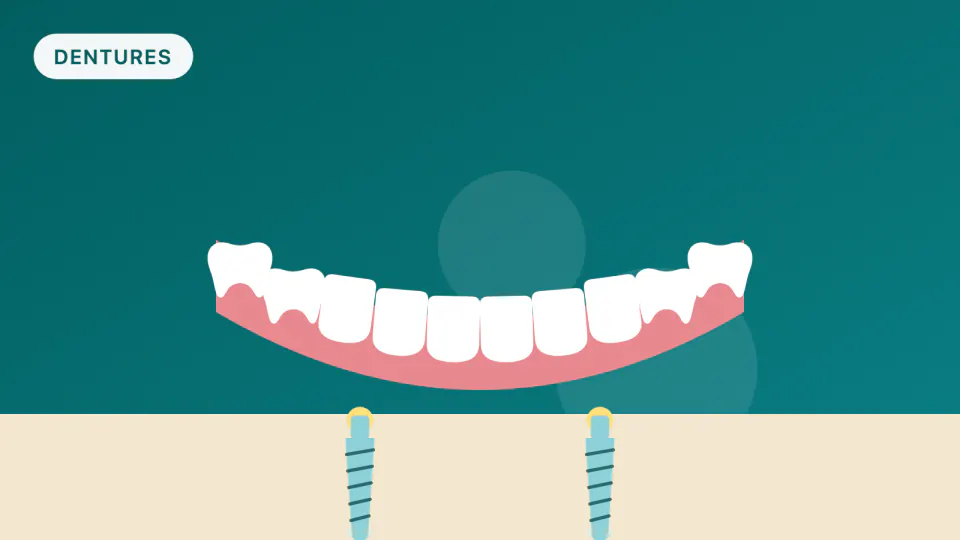
A mini implant is a narrow titanium post, noticeably slimmer than a standard implant. A few of them are placed in the jaw, and small attachments on top snap into matching fittings built into the denture. Most commonly this is a ball-and-socket style (O-ring) connection. The denture still rests on the gums, but it clicks into place instead of sliding around when you chew or talk.
Because the posts are slim, placement is often less invasive. Dentists may be able to use them where the ridge is too thin for a standard implant without bone grafting first. That is the main appeal for people with long-term denture wear and bone that has shrunk over the years.
What does the research show?
Systematic reviews of mini implants that support overdentures have reported the following general patterns. Exact figures differ from study to study, so treat these as trends rather than promises:
- Overall survival: most mini implants stayed in place over the follow-up periods studied. Many studies followed patients for a relatively short time, so long-range conclusions rest on fewer cases.
- Lower jaw versus upper jaw: survival has generally been reported as higher in the lower jaw. Upper-jaw data is more limited, and results there have tended to be less favorable.
- Number of implants: in the lower jaw, dentures held by four mini implants have often been reported to do better than those held by two.
- Timing of loading: findings on attaching the denture right away versus waiting have been mixed, and researchers have advised caution when implants are not firmly stable at placement.
Reviews of randomized trials comparing mini implants with standard-size implants for lower dentures have generally found somewhat lower and more variable survival for mini implants. Patients in those trials reported better quality of life once their dentures were stabilized, whichever implant type they received. This is encouraging, but the number of trials is small and follow-up is often short. It is early-to-moderate evidence, not a final verdict.
What breaks, and how often?
This is the part that gets less attention. In the studies that tracked it, the implants usually held. The dentures and attachments took more of the wear:
- Denture fractures: cracks in the denture base were reported fairly often, and they appeared to be more frequent in the upper jaw.
- Worn attachments: the fittings inside the denture, and sometimes the small posts on the implants, wore out and needed replacing.
- Relines and replacements: a meaningful share of dentures needed a reline, and some needed to be remade.
Some dentists use a metal-reinforced denture and close follow-up, which may help reduce breakage. Because the posts are narrower, dentists pay close attention to how chewing forces are distributed, especially when a denture is held by only a few small anchors. In practice, plan on periodic visits to swap worn parts and check the fit.
Who might mini implants suit?
Whether mini implants make sense is something a dentist decides after an exam, imaging, and a review of your medical history. Once that evaluation is done, a dentist may consider mini implants for someone who:
- wears a complete lower denture that slips or rubs;
- has a thin or narrow ridge, where a standard implant might need grafting;
- prefers a shorter, less invasive procedure with a quicker recovery;
- is comfortable with ongoing maintenance of the denture.
They may be less suitable in some situations. Factors such as heavy teeth grinding, smoking, and poorly controlled diabetes can affect implant outcomes in general, so a dentist and your physician should review them together. Standard implants may be a more suitable long-term choice for some patients, especially if bone is adequate and maximum durability is the priority.
What about cost and coverage?
Mini implants generally involve less surgery and fewer components than a full standard-implant overdenture, so they may cost less, depending on the case. The final figure varies with the number of implants, whether your current denture can be adapted, and any extra care needed. We accept most PPO plans (no HMO/DMO), offer in-house membership plans starting at $30 a month, and have 0% APR financing through CareCredit and Proceed Finance.
Common questions about mini implants for dentures
Q: Can my current denture be used?
Sometimes. Many existing dentures can be adapted to snap onto implants, though a worn or poorly fitting one may be better replaced. A dentist will need to examine it first.
Q: How many mini implants will I need?
Research has often favored four in the lower jaw over two. The right number depends on your bone, bite, and goals.
Q: Are mini implants as strong as standard implants?
In the trials reviewed, survival was generally somewhat lower for minis, and denture repairs appear to be more common. Both types noticeably improved patient quality of life. Long-term data on minis are still maturing.
Q: Will I still need follow-up visits?
Yes. Expect periodic checkups, replacement of worn attachments, and occasional relines or repairs.
Ready to talk about a loose denture?
If your denture slips or sore spots keep coming back, a dentist can evaluate whether mini implants, standard implants, or a different approach fits your jaw and your budget. Call our Belmont office at (650) 591-1984 or visit carlmontdentalcare.com to schedule a visit. We welcome patients from across San Mateo County.
From our patients
★★★★★“Dr Jiang took over the practice from a corporate group that previously ran it. The corporate group was after money. I had three different dentists in three visits and the dentists didn't seem that interested. Dr Jiang is a breath of fresh air. I have had teeth cleanings, cavities filled, a crown and and an implant.”
★★★★★“Great people! Everyone smiled and made me feel good about coming here for my dental needs. Nancy helped me remove the Invisalign attachments, the whole process really felt like a family dental care, were very personable and caring, and worked with me as best they can to plan and resolve my crown problem.”