LANAP Laser Gum Treatment in Atherton: What the Research Shows
· Carlmont Dental Care
LANAP is a laser-based, no-scalpel option for moderate-to-severe gum disease. See what the research suggests, where the evidence is still limited, and who may be a candidate.
LANAP is a laser-based gum treatment that avoids the scalpel and sutures of traditional flap surgery. Some studies suggest it may be associated with less post-operative discomfort and faster soft-tissue healing, and some report less gum recession. Systematic reviews generally find outcomes comparable to conventional surgery, and the quality of the evidence is often low, so long-term head-to-head data are still limited. Treating gum disease well matters for your teeth and for any future dental implants.
This article is general education, not a diagnosis or individual treatment advice. A periodontal exam is needed to determine what is right for you.
What is LANAP, and how is it different from gum surgery?
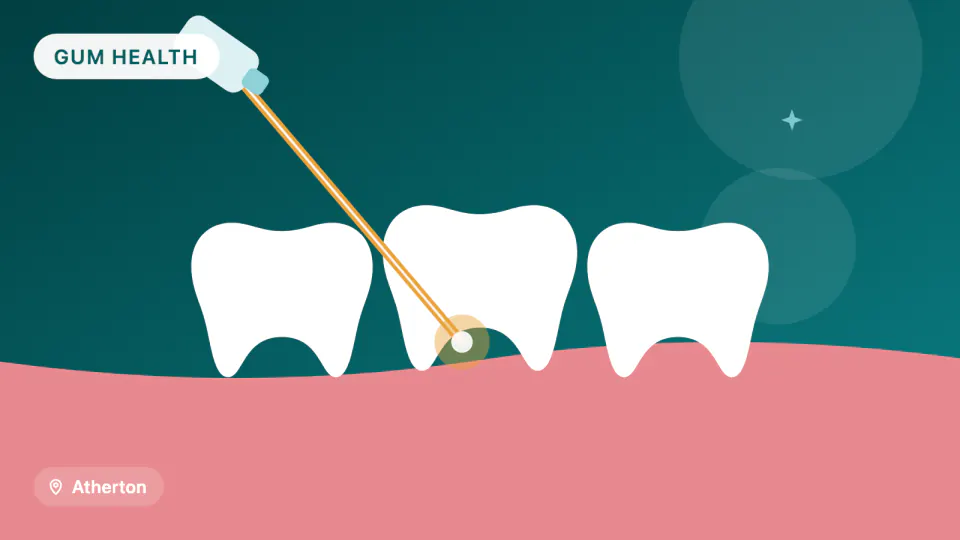
LANAP stands for laser-assisted new attachment procedure. It treats moderate-to-severe periodontitis, the form of gum disease where infection has created deep pockets between the teeth and gums and started to erode supporting bone. In general, a dentist uses a specialized dental laser to remove diseased tissue lining the pocket, cleans the tooth roots with ultrasonic instruments and root planing, and then uses the laser again to help form a stable clot. The bite may also be adjusted so that biting forces do not interfere with healing.
Traditional flap surgery takes a different route. The gum is cut and lifted away from the teeth so the roots can be cleaned, then stitched back, often at a slightly lower position. That approach works, but the repositioned gum can leave teeth looking longer and more sensitive. LANAP was designed to avoid cutting the gum open, and some studies report less recession with it.
What does the research actually show?
Published reviews describe LANAP as a minimally invasive alternative to conventional periodontal surgery. Across those reviews, some studies reported less pain afterward, faster gum healing, and less recession. Pocket depth reduction and attachment gain were described as comparable to flap surgery, and in some studies better.
It is worth being precise about what that does and does not mean:
- Comparable, not proven superior. Attachment gain results vary from study to study. Only some studies show a clear advantage for LANAP, so it is fair to call outcomes similar rather than better.
- Many studies are small. Some of the encouraging data come from small case series with relatively short follow-up and no comparison group.
- Long-term data are still building. Researchers continue to call for larger, longer controlled trials comparing LANAP with other surgical approaches.
- It is technique-sensitive. Results depend on training and experience, and the equipment is a significant investment for a practice.
In short, the early picture is encouraging, especially for comfort and recovery, but LANAP should not be presented as a guaranteed replacement for every surgical case.
Why does treating gum disease well matter beyond your gums?
Gum disease is a leading cause of tooth loss in adults, and what happens next has ripple effects.
Implants. Many people assume an implant sidesteps gum problems. Research points the other way: people with a history of periodontitis have a higher risk of implant complications, including peri-implantitis, an infection around the implant. The encouraging side is that implants can still be placed successfully when gum disease is well controlled and stabilized, followed by regular maintenance visits.
Keeping natural teeth. Some research links tooth loss with other health concerns, including cognitive decline, though this kind of association does not prove cause and effect. Regardless, holding on to your own healthy teeth as long as possible is a reasonable goal to discuss with a dentist.
Who might be a candidate, and what is recovery like?
LANAP is aimed at patients with moderate-to-severe gum disease: bleeding gums, deep pockets found during a periodontal exam, gum swelling, or teeth that feel loose. Not everyone with gum problems needs it. Milder cases often respond to a deep cleaning, and some advanced cases may still be better served by other surgical approaches. A dentist will typically review your gum measurements, X-rays, medical history, and habits like smoking before recommending anything.
Studies report less post-operative discomfort on average, though everyone heals differently. Dentists commonly advise a soft-food diet for a period, careful cleaning around the treated areas, and follow-up visits. Long-term success depends heavily on daily home care and regular periodontal maintenance, just as with any gum treatment.
Is having care in one office a practical benefit?
When laser gum treatment is referred to another office, it can mean extra appointments, a new set of records, and coordination between offices. Referral to a specialist is often the right choice, especially for complex cases, but some people simply prefer the convenience of continuing care in one place. If LANAP interests you, ask any office whether it offers the procedure and whether the treating dentist has completed the laser manufacturer's training.
Many people in Atherton ask whether a gentler option exists before committing to surgery. If you are researching local care, our page on the best dentist in Atherton, CA explains how we serve the community. Our Belmont office is about 15 to 20 minutes from Atherton depending on traffic, via Highway 101 or El Camino Real, so a consultation can fit into a workday.
Common questions about LANAP
Q: Is LANAP painful?
Local anesthesia is used during treatment. Studies describe less post-operative pain than flap surgery on average, although some soreness and sensitivity afterward are normal.
Q: Does it work as well as traditional gum surgery?
Published reviews report comparable clinical results, with some studies favoring LANAP. Long-term comparisons are still limited, so a dentist will weigh your specific situation.
Q: Will insurance cover it?
Coverage depends on your plan and diagnosis. Insurance acceptance varies by plan, so please call the office to confirm whether your specific plan is accepted. Cost varies with how many areas of the mouth need treatment, and a written estimate is provided after your consultation. Membership plans and financing through CareCredit or Proceed Finance may also be available for qualified patients, subject to credit approval and promotional terms.
Q: Can I get dental implants if I have had gum disease?
Sometimes, depending on your evaluation. The gum disease should generally be treated and stable first, and ongoing maintenance matters. Research shows a higher risk of implant complications after periodontitis, which is why stabilizing your gums comes first.
Ready to find out where your gums stand?
If you have bleeding, swelling, or gum pockets that a dental professional has flagged, a consultation can clarify which approach may fit you, whether that is a deep cleaning, laser treatment, or something else. Call our Belmont office at (650) 591-1984 or visit carlmontdentalcare.com to schedule. We serve patients in Atherton and nearby cities, and we are happy to talk through options with no pressure.
From our patients
★★★★★“I moved to Belmont a little over a year ago for a work opportunity and recently decided to look for a new dentist closer to where I live. I recently found Carlmont Dental Care, and I have been extremely satisfied with the care and service I have received! The facility is very nice and clean, and all of the staff are kind and welcoming. I can tell that Dr.”
★★★★★“I had my first visit to Carlmont Dental Care for a dental exam and cleaning, and it was an outstanding experience! The office is clean, bright, and modern, which made for a very welcoming atmosphere. The staff were incredibly friendly and made me feel comfortable right from the start.”