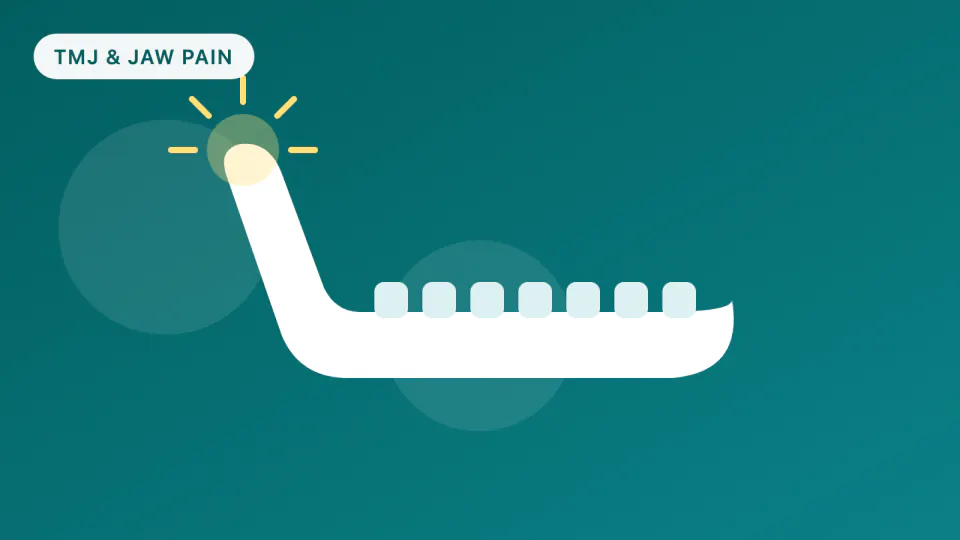
Does Invisalign Affect Your Jaw Joint? What Imaging Studies Show
· Carlmont Dental Care
Published reviews of imaging studies have generally found small, mixed changes in the jaw joint with clear aligners, and the evidence is low in certainty. Here is what that means if you have jaw symptoms.
Short answer: Clear aligners such as Invisalign do not appear to reliably cause or cure jaw joint (TMJ) problems. Published reviews of 3D imaging studies have generally found small changes in and around the joint, but results are mixed across small studies and the certainty of the evidence is low. Anyone with jaw pain, clicking, or locking should have it evaluated before starting aligners.
This is general education, not individual dental advice. Talk with your dentist about your own jaw and bite.
What do imaging studies of aligners and the jaw joint show?
Researchers have looked at clear aligners and the temporomandibular joint (TMJ), the hinge that connects your lower jaw to your skull. Only a small number of studies use 3D imaging, such as cone beam CT, to compare the joint before and after aligner treatment, and published reviews of those studies have generally found small changes with low-certainty evidence.
Depending on the study, reported findings have included:
- Modest changes in joint space: The gap between the top of the jaw bone (the condyle) and the socket above it was sometimes slightly different after treatment.
- Small changes in the socket: The fossa, the hollow in the skull that cradles the condyle, was occasionally measured as slightly different in depth.
- Mixed results for condyle position: Some studies found little change in where the jaw bone sits in its socket, while others reported small shifts, such as the condyle moving slightly forward. The findings do not line up neatly.
Researchers generally cannot say whether these small changes are helpful, harmful, or simply part of normal adaptation. Because the certainty of the evidence is low, future studies could easily change the picture.
Why is the evidence still so uncertain?
The research base is small, and several limitations hold the findings back:
- Many of the studies looked back at records rather than following patients forward in a controlled way.
- The studies measured the joint in different ways, so their results are hard to compare directly.
- Some of the changes were under a millimeter, which is close to the margin of error of the imaging itself.
- Few studies tracked whether patients actually felt better or worse. Whether a measurement changed is a different question from whether a person has pain.
Reviews that focused on adults have described their conclusions as tentative. Researchers in this area have repeatedly called for studies that use standardized joint imaging so results can finally be compared side by side.
Do aligners cause or cure TMJ problems?
Based on what we know today, probably neither, at least not reliably, though small studies do not all agree. Many dentists read the broader research on orthodontic treatment the same way: there is little clear evidence that straightening teeth causes jaw joint disorders, and little clear evidence that perfecting the bite prevents or treats them. Jaw joint problems are understood to have many contributors, including muscle tension, clenching or grinding, stress, joint structure, and past injury.
Some people do notice temporary jaw or muscle soreness when they begin aligners or switch to a new tray. It often settles as the mouth adjusts. Some small studies of chewing muscles suggest symptoms may be more noticeable early on and ease later, though that research is limited and varies from study to study.
Aligners used to move back teeth have also been studied. Some small studies reported minor joint space changes, which researchers have suggested may reflect the muscles and joint adapting rather than lasting damage. The evidence is thin, and patients with existing joint symptoms are generally advised to be monitored.
What should you do before starting aligners?
The practical takeaway from the research is simple: check the joint first. Many dentists consider a TMJ screening part of a thorough pre-treatment exam. A screening may include:
- A history of jaw pain, headaches, clicking, popping, locking, or limited opening.
- An exam of the jaw muscles and joints, including how far and how smoothly you can open.
- A review of habits such as clenching, nighttime grinding, or nail and cheek biting.
- Imaging when the findings call for it.
If symptoms are present, dentists often recommend getting them calmed down and clearly documented first. Treatment can then proceed as planned or be adjusted. If jaw symptoms show up partway through treatment, talk with your dentist about whether to pause and have them looked at rather than push through. Tell your dentist if you clench or grind, since a nighttime guard may be worth discussing alongside aligners.
Common questions about Invisalign and the jaw joint
Q: Can Invisalign give me TMJ disorder?
There is no solid evidence that it does. Research so far shows small and mixed imaging changes and no clear link to lasting jaw disorders, but the evidence is early and low in certainty. Mild, short-term soreness is more commonly reported than lasting problems.
Q: Can Invisalign fix my jaw pain or clicking?
Not reliably. Aligners move teeth, and jaw pain often comes from muscles, habits, or the joint itself. Straighter teeth do not guarantee a calmer jaw, so pain should be evaluated on its own.
Q: Should I avoid aligners if my jaw clicks?
Not necessarily, but it is worth raising with your dentist. A painless click is common, and many people with one still go on to have aligner treatment. Painful clicking, locking, or limited opening is a good reason to have a joint evaluation first.
Q: Is jaw soreness normal when I start a new set of trays?
Mild, temporary soreness is commonly reported as your teeth and muscles adjust. If it is severe, lasts more than a couple of weeks, or keeps getting worse, let your dentist know.
Talk it through before you start
If you live in Belmont, San Mateo County, or nearby and are considering aligners, a consultation is a good time to bring up any jaw symptoms. A consultation can include a look at your teeth, bite, and jaw joints so you can decide with the full picture. Call (650) 591-1984 or visit carlmontdentalcare.com to schedule a visit. We accept most PPO plans and offer in-house membership plans and 0% APR financing options. Fees vary with case complexity, and a written estimate follows your consultation.
From our patients
★★★★★“I had my first visit to Carlmont Dental Care for a dental exam and cleaning, and it was an outstanding experience! The office is clean, bright, and modern, which made for a very welcoming atmosphere. The staff were incredibly friendly and made me feel comfortable right from the start.”
★★★★★“Dr. Jiang and her staff are super super sweet! She made the whole teeth cleaning process super fun and relaxing. I enjoyed talking to her while cleaning teeth. What I like most about her is on top of her exceptional skills, she also explains detailedly on how I should protect my teeth, and what are the potential best cost-effective treatment plans based on my insurance.”