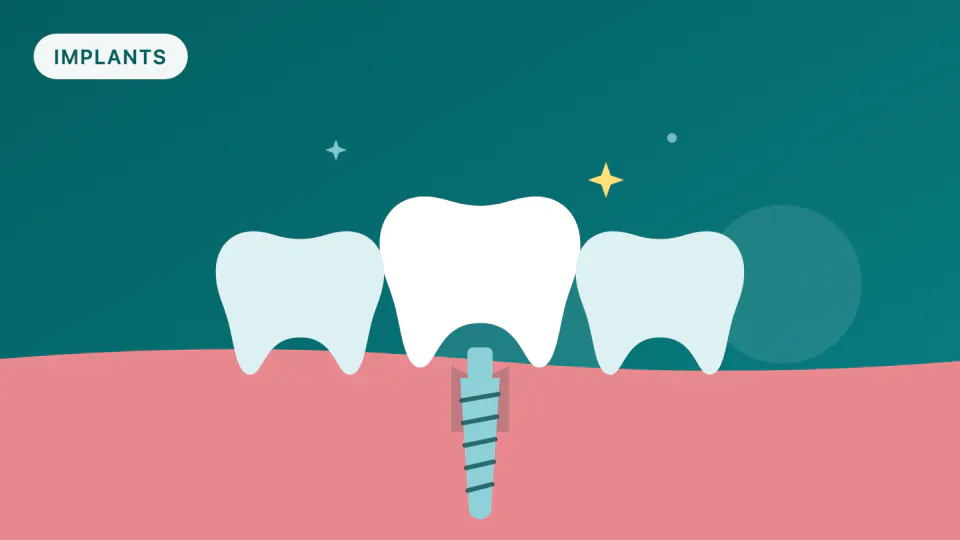
Damaged Socket Bone: Can You Still Get a Dental Implant?
· Carlmont Dental Care
A damaged extraction socket doesn't rule out a dental implant. Learn how bone loss around a tooth affects the plan, and when grafting happens before vs. during placement.
Yes — a damaged or "non-intact" extraction socket can usually still receive a dental implant, but the treatment plan changes. Depending on how much bone wall is missing, your dentist may need to graft the site and let it heal before placing the implant, or graft at the same time the implant goes in. Recent research suggests esthetic and survival outcomes in damaged sockets can approach those of intact ones when grafting and gum-tissue techniques are used thoughtfully.
What Makes a Socket "Intact" vs. "Non-Intact"?
When a tooth is removed, the bony socket that held its root ideally has four solid walls, including a thin plate of bone on the cheek (buccal) side. In reality, an intact buccal wall is present in less than half of extraction sites — front-tooth sockets in particular are prone to two kinds of defects: a fenestration, a small window-like gap in the bone often linked to old infection or a failed root canal, and a dehiscence, where the entire facial wall is missing down to the gumline, often from a vertical root fracture or trauma. Either one makes a socket "non-intact."
The distinction matters because that thin buccal wall is what holds the gum tissue's shape and supports a natural-looking result once the implant is restored. When it's damaged, both the bone and the soft tissue over it are more likely to shrink during healing unless the site is managed with that in mind.
What the Latest Research Shows About Outcomes
A 2025 systematic review pooled data from 20 studies covering 525 front-tooth implants placed immediately after extraction, comparing intact sockets against non-intact ones. The findings were reassuring but nuanced. Buccal bone thickness ended up in a similar range for both groups — roughly 1.1 to 3.2 millimeters for intact sockets versus 1.2 to 3 millimeters for damaged ones. Pink esthetic scores, a standardized way of grading how natural the gum tissue looks around an implant crown, were somewhat lower on average for non-intact sockets (about 9.3 to 12.4 out of a possible 14, versus 10.5 to 12.8 for intact sites), and implant survival exceeded 90% in both groups.
It's worth being precise about what this does and doesn't show. The review's authors were candid that the overall quality of the underlying studies was low, very few were rigorous randomized trials, and techniques varied widely from one study to the next — so this is best read as early, encouraging evidence rather than a settled verdict. The authors specifically noted that a single well-defined "best protocol" for damaged sockets doesn't exist yet, and more high-quality research is still needed.
When Does Damaged Bone Mean Grafting First vs. Grafting at Placement?
The amount of bone wall lost is what drives this decision:
- Smaller defects (roughly under half the wall missing, with solid bone remaining toward the root tip and adjacent to the tongue side) can often be treated in one visit: the implant is placed immediately, and grafting material fills the gap around it, sometimes covered with a collagen membrane to guide new bone growth.
- Larger defects (more than about half of a wall gone, active infection at the site, or too little supporting bone to stabilize an implant) generally call for a staged approach — the socket is grafted and allowed to heal for several months first, then the implant is placed into more solid bone. This traditionally reduces the risk of complications compared with forcing an immediate implant into a severely compromised site.
Case selection matters as much as the defect size: whether there's any active infection, how thick the remaining bone is, and the position of the tooth all factor into which path your dentist recommends. This is exactly the kind of judgment call that benefits from an in-person evaluation with imaging, rather than a generic rule.
How Soft Tissue Grafting Improves the Esthetic Result
The 2025 review also pointed to something practical: many of the studies with damaged sockets didn't use connective tissue grafting or an immediate temporary crown to shape the gum during healing — techniques that, when they were used, appeared to help narrow the esthetic gap between damaged and intact sites. Adding a small graft of the patient's own connective tissue (typically taken from the roof of the mouth) plugs a common weak point: even when the bone graft succeeds, thin gum tissue over a healed defect can still look slightly different from a healthy site. Building up that tissue is often what separates a good result from a great one in the esthetic zone.
Common Questions About Implants and Damaged Socket Bone
Q: How do I know if my socket is damaged before an extraction?
Your dentist can often tell from a 3D scan (cone beam CT) or during the extraction itself. Chronic infection, a cracked root, or gum recession around a tooth are all signs that some bone loss may be present.
Q: Does a damaged socket mean I can't get an implant at all?
No. Even sockets with significant wall loss can typically be grafted and later restored with an implant — it usually just means a longer timeline with a healing period before the implant goes in, rather than a same-day placement.
Q: Will a damaged socket affect how natural my implant looks?
It can, particularly right at the gumline, but grafting the bone and, when appropriate, adding soft tissue can bring the esthetic result much closer to what you'd see with a healthy socket.
Q: How long does the graft-first approach take before I get my implant?
It varies by case, but a socket graft generally needs several months to mature into solid bone before an implant can be placed into it. Your dentist will confirm readiness with an exam and imaging rather than a fixed calendar date.
Q: Is bone grafting painful or high-risk?
Bone grafting for implant sites is a routine, well-established procedure with a healing process similar to a tooth extraction. Your dentist will walk you through what to expect for your specific case.
If you're missing a tooth or facing an extraction in Belmont, San Carlos, San Mateo, or anywhere else in San Mateo County and you're wondering whether socket damage complicates an implant, the best next step is a consultation and imaging review. Every case — from bone quality to defect size to cost, which varies by complexity and is best confirmed in writing after your exam — is different. Call Carlmont Dental Care at (650) 591-1984 or visit carlmontdentalcare.com to schedule a visit at our Carlmont Drive office and talk through your options.
From our patients
★★★★★“Dr Jiang took over the practice from a corporate group that previously ran it. The corporate group was after money. I had three different dentists in three visits and the dentists didn't seem that interested. Dr Jiang is a breath of fresh air. I have had teeth cleanings, cavities filled, a crown and and an implant.”
★★★★★“Great people! Everyone smiled and made me feel good about coming here for my dental needs. Nancy helped me remove the Invisalign attachments, the whole process really felt like a family dental care, were very personable and caring, and worked with me as best they can to plan and resolve my crown problem.”