Gum Graft Without Palate Tissue? Collagen Matrix vs Autograft
· Carlmont Dental Care
Can a collagen matrix replace tissue taken from your palate in a gum graft? Recent research on comfort versus root coverage, and when each option may make sense.
Short answer: Yes, a collagen matrix can sometimes stand in for tissue taken from the roof of your mouth, and it usually means a shorter procedure and less discomfort. Pooled research suggests the two approaches look similar early on, but over about a year, your own tissue graft tends to cover more of the exposed root and build more keratinized (firm, protective) gum. The right choice depends on your gums, your priorities, and how much coverage is needed.
This article is general education and not a diagnosis or treatment recommendation. Whether and how to treat gum recession depends on an in-person exam by a dentist or periodontist.
What is the comfort-versus-coverage trade-off?
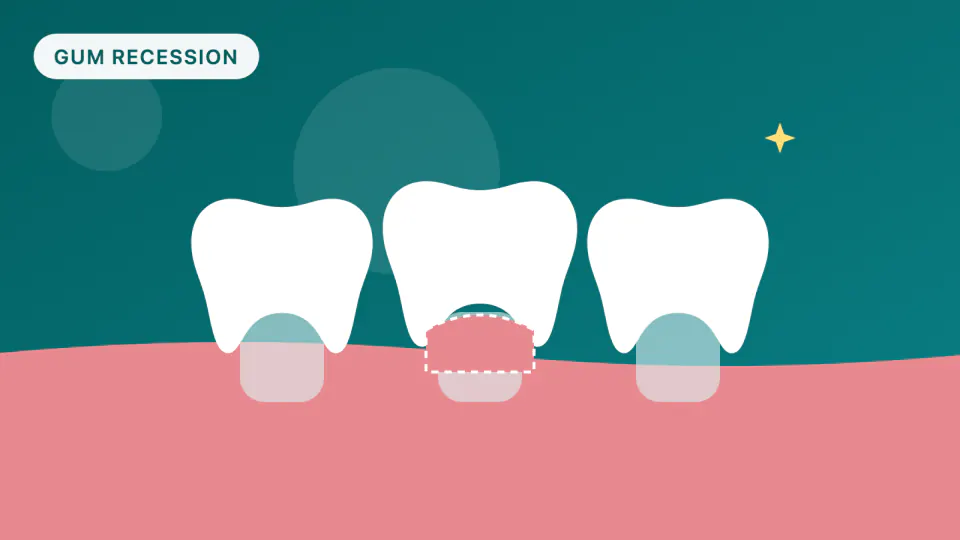
Gum recession exposes the root of a tooth, which can cause sensitivity, make the tooth look longer, and make it harder to keep clean. The connective tissue graft has long been considered the reference standard for treating it: a small piece of tissue taken from your own palate and placed over the exposed root. It works well, but it means two surgical sites, the area being repaired and the palate where the tissue came from. Palate discomfort is a commonly reported drawback of harvesting tissue.
A collagen matrix is a processed, animal-derived scaffold that is placed where the graft would go, so no tissue needs to be harvested from your mouth. Your own cells then grow into it. The appeal is obvious: no palate wound. The question researchers have been asking is what you give up in exchange.
These are not the only two choices. Other graft materials, such as donor-derived (allograft) tissue matrices, and a variety of surgical techniques are also used, and results can vary by product and by surgeon.
What do the recent studies show?
Recent systematic reviews have pooled the results of randomized clinical trials, which gives a clearer picture than any single study. Here is the general pattern:
- Early results look similar. Pooled analyses of randomized trials have generally found no meaningful difference in how much the recession improved at 6 months.
- The gap shows up by 12 months. At one year, your own tissue graft performed better for reducing recession, for achieving complete root coverage, and for gaining keratinized gum tissue.
- The matrix is faster and often more comfortable. Across trials, surgery was consistently shorter with the matrix. Some reviews also found that several of the included trials reported less pain after surgery with the matrix, though it gained less keratinized tissue.
- Both approaches help. In the studies, both groups improved substantially. The difference is one of degree, not success versus failure.
It is worth being honest about what the research does not yet show. The trials are fairly small, techniques and products vary between studies, and follow-up is mostly one year or less. Newer matrix products have not been studied as thoroughly, and results may differ from one product to another. How well the results hold up over many years is still being worked out. Pain results are also hard to compare because studies measured them in different ways. This is a maturing area of research, not a settled one.
When might each option be considered?
A palate graft is often favored when:
- The recession is deeper or involves several teeth, and complete root coverage is the main goal.
- The existing gum tissue is thin, and building a thicker, more durable band of gum matters.
- Long-term stability is the top priority and you are comfortable with a second surgical site.
A collagen matrix is often considered when:
- Comfort and a shorter procedure are high priorities.
- You have limited or thin palate tissue, or have had a harvest site that healed poorly before.
- Medical considerations make a shorter surgery with one surgical site appealing.
- You are weighing a modest improvement against a more extensive procedure.
Neither list is a rule. A dentist will typically look at how far the recession extends, the thickness and width of your existing gum, your bite and brushing habits, and what matters most to you. Some patients accept a little less predictability for a much easier recovery; others would rather go through the harder recovery for a better chance at full coverage.
Does grafting always require surgery?
Not always. Mild recession that is stable and not causing symptoms is often just monitored, with gentler brushing technique and regular checkups. Grafting is usually considered when recession is progressing, causing sensitivity or cosmetic concern, or leaving too little protective gum around a tooth. If your teeth are crowded or your bite puts extra force on certain teeth, addressing those factors can also affect how well a graft holds up.
Common questions about gum graft alternatives
Q: Is a collagen matrix as good as my own tissue?Early on, results appear comparable. At around a year, studies tend to favor your own tissue for root coverage and keratinized gum gain. The matrix is a reasonable option for the right situation, not a guaranteed equivalent.
Q: Will I have less pain with a matrix?Some studies suggest less discomfort because there is no palate wound, though patients vary and the research measured pain in different ways. Some soreness at the treated area is normal either way.
Q: Is the matrix made from my own body?No. It is a purified collagen scaffold from an animal source, which is one reason people with specific preferences or concerns should discuss it before choosing.
Q: Does insurance cover gum grafting?Coverage varies by plan and by whether the graft is considered medically necessary. We accept most PPO plans, and our team can help you review benefits. Investment varies with how many teeth are involved and the technique used, and a written estimate is provided once a treatment plan is in place. Membership plans start at $30/month, and 0% APR financing is available through CareCredit and Proceed Finance.
Talk it through before you decide
If you have noticed your gums pulling back, an exam is how a dentist determines whether treatment is needed and which approach might fit your mouth. We can evaluate your gums and, if needed, coordinate care with a periodontist. Our office in Belmont welcomes patients from across San Mateo County. Call (650) 591-1984 or visit carlmontdentalcare.com to schedule a visit.
From our patients
★★★★★“Very fast, friendly and clean. I really enjoyed my most recent visits, the staff is kind and really helpful when it comes to insurance purposes. The hygienist is very sweet and really helps you understand how to keep your mouth happy.”
★★★★★“Met my dental team today for my 1st exam & cleaning, I’m a super nervous (annoying) patient but they handled me with kindness & reassurance. I am so happy with my choice to come to Carlmont Dental Care! Thank you!”