Diabetes and Dental Implants: Why Your A1c Matters
· Carlmont Dental Care
Most people with diabetes can get dental implants. Recent research shows your A1c affects how well the gum and bone around an implant hold up, so here's what to know.
Yes, many people with diabetes can get dental implants, and most implants in people with diabetes keep working. What your A1c changes is less about whether an implant survives and more about how healthy the bone and gums around it stay. Recent research suggests people with well-controlled diabetes (A1c at or below about 7%) tend to do much like people without diabetes, while A1c above about 8% is linked to more bone loss and inflammation.
What does your A1c have to do with an implant?
An A1c is a blood test that reflects your average blood sugar over roughly the past two to three months. For most adults with diabetes, a common treatment goal is below 7%, though your physician may set a different target for you.
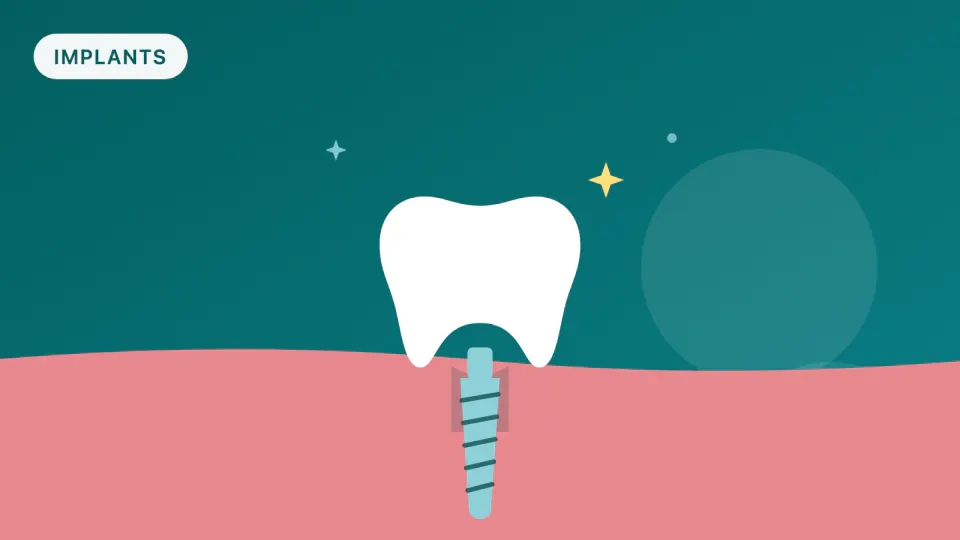
An implant is a small titanium post that fuses with your jawbone. Blood sugar that runs high for long periods can slow healing, reduce blood flow to tissue, and make the gums less able to fight bacteria. That is why dentists look at A1c before planning surgery.
What does the newest research show?
A large 2026 systematic review pulled together 54 studies on implants in people with diabetes. Its main takeaways, in plain terms:
- Survival is usually high. Implant survival in people with diabetes was often above 90 to 95 percent.
- Good control looks like no diabetes. People with an A1c at or below 7% often had outcomes comparable to people without diabetes.
- Poor control shows up in the tissue. With an A1c above 8%, studies consistently linked diabetes to more bone loss around the implant, deeper gum pockets, and more bleeding when the area was probed.
A separate 2026 meta-analysis looked specifically at implants placed right after a tooth is removed. It combined 10 studies covering 1,350 patients. Survival was essentially the same for people with well-controlled diabetes and people without diabetes. Bone loss around the implant was a little greater in people with diabetes, and the gap depended on control. Compared with people without diabetes, those with well-controlled diabetes lost about 0.08 mm more bone, and those with poorly controlled diabetes lost about 0.39 mm more.
Those are very small amounts, and the authors considered them unlikely to change survival on their own. The pattern still points the same way: the better your control, the closer your results are to the norm.
What the evidence does not yet show
This is a developing area, so it helps to be honest about the limits:
- The studies vary a lot in design, follow-up time, implant type, and how they measured bone loss.
- Some groups, especially people with poorly controlled diabetes, were small.
- Studies label people as well or poorly controlled in different ways, so no single A1c number works as a hard cutoff.
- Much of the data covers a few years of follow-up, so long-term evidence is still maturing.
In short, an A1c above 8% is not a automatic no, and an A1c under 7% is not a guarantee. It is one important piece of your overall picture, along with gum health, smoking, and how well you can keep the area clean.
How should you prepare, and what happens after?
Researchers emphasize two things: getting blood sugar well managed before surgery, and careful follow-up afterward. In practice, that often looks like this:
- Share your latest A1c and medications. Bring your most recent result and a medication list to your consultation. Because A1c reflects several months, changes you make now take time to show up on the test.
- Work with your physician. If your number is higher than your target, your medical team can help you improve it. A dentist may suggest waiting until control improves before surgery.
- Treat gum disease first. Active gum infection raises risk around any implant, so a dentist will typically address it before placing one.
- Plan closer maintenance. Regular checks of bone levels, pocket depth, and bleeding around the implant, plus personalized home-care coaching, help catch inflammation early. Some people with diabetes benefit from more frequent cleanings.
- Keep monitoring your blood sugar. Steady control after the procedure matters just as much as control beforehand.
Common questions about diabetes and dental implants
Q: Is there a cutoff A1c for getting an implant?
There is no single universal number. Research generally groups people as well controlled (around 7% or below) or poorly controlled (above about 8%). A dentist will usually weigh your A1c together with your overall health, and may coordinate with your physician.
Q: Do implants fail more often if I have diabetes?
In the studies reviewed, survival stayed high for most people with diabetes, and for people with well-controlled diabetes it was comparable to people without diabetes. The bigger difference was in bone loss and gum inflammation around the implant, particularly with poor control.
Q: Can I still get an implant if my A1c is high right now?
Possibly, but a dentist may recommend improving your control first, since it can lower your risk of complications. Your consultation is a good time to talk through timing.
Q: Will I need extra dental visits afterward?
Many people with diabetes benefit from closer maintenance, because catching early inflammation helps protect the bone around the implant. Your schedule is tailored to your needs.
Q: Does Type 1 versus Type 2 matter?
Much of the research lumps them together or focuses on Type 2. The consistent message across the studies is that the level of blood sugar control matters.
Planning an implant in Belmont
If you have diabetes and are considering an implant, a consultation is the best way to see where you stand. Our team at 2100 Carlmont Drive, Suite 8, in Belmont can review your health history, talk through timing, and give you a written estimate, since investment varies with the complexity of your case. We accept most PPO plans, offer in-house membership plans and 0% APR financing through CareCredit and Proceed Finance, and have Mandarin- and Spanish-speaking team members. To schedule a consultation, call (650) 591-1984 or visit carlmontdentalcare.com.
This article is general education, not personal medical advice. Please talk with your physician about your blood sugar targets.
From our patients
★★★★★“Great people! Everyone smiled and made me feel good about coming here for my dental needs. Nancy helped me remove the Invisalign attachments, the whole process really felt like a family dental care, were very personable and caring, and worked with me as best they can to plan and resolve my crown problem.”
★★★★★“I lost a crown on a molar. I made an appointment. They were ready to take me at the correct time and Date. They were efficient and professional a very enjoyable experience.”