All-on-4 Implants in San Mateo: Timeline, Materials, Durability
· Carlmont Dental Care
What to expect from consultation to final bridge for All-on-4 implants in San Mateo, plus what recent research says about zirconia vs. acrylic bridge materials and durability.
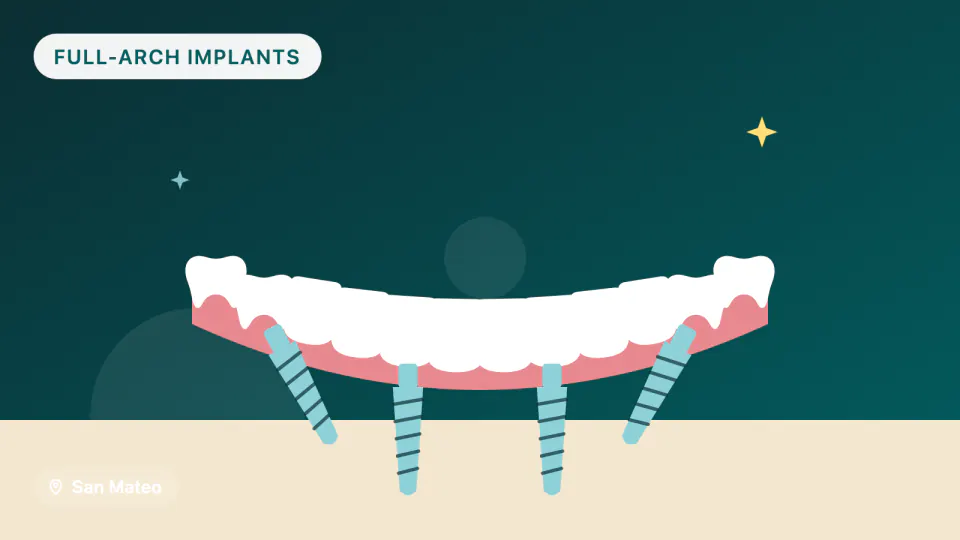
All-on-4 full-arch implants replace an entire row of missing or badly failing teeth with four implants (or more in some full-arch cases) topped by one fixed bridge, typically finished in two stages: a surgical and healing stage lasting roughly three to six months, followed by delivery of the final bridge. Newer research is reshaping a key decision inside that timeline — which material the final bridge is made from — because some recent research suggests bridges combining a metal framework with a zirconia layer may wear less and carry lower rates of gum inflammation around the implants than the older metal-and-acrylic style, though this evidence is still emerging and long-term outcome data is still being gathered. For patients weighing this decision in San Mateo, the material choice is worth settling at the very first planning visit, before the surgical plan is finalized.
How the Timeline Unfolds, Start to Finish
The process starts with a consultation and a 3D imaging scan to measure jawbone volume and map out where implants can be anchored securely. On surgery day, any remaining unhealthy teeth are removed, four implants (or more in some cases) are placed, and most patients leave the same day wearing a temporary fixed bridge — a protocol often called immediate loading.
Healing comes next, and it takes patience: the lower jaw often integrates in three to four months, while the upper jaw, which tends to have softer bone, commonly needs five to six months before it's ready to bear full chewing force. Once healing is confirmed, new impressions or digital scans are taken, the permanent bridge is fabricated, and it's fitted and adjusted at delivery. This is also the point where the material decision below becomes final.
The Material Decision That's Now Made Up Front
Full-arch bridges are generally built one of two ways: a metal framework layered with acrylic (denture-style) teeth, or a metal framework topped with a milled zirconia layer. Acrylic has long been the traditional workhorse — lighter and easier to adjust — but it tends to wear down faster and its surface can accumulate plaque more readily near the gumline.
Some recent comparative research suggests metal-zirconia prostheses may wear more slowly and carry a lower risk of peri-implantitis, the gum inflammation that can threaten the implants underneath, than metal-acrylic bridges. This is still a relatively young body of comparative evidence — not the multi-decade tracking dentistry eventually wants — so it's fair to call the long-term picture still maturing rather than settled. Even so, the direction of the evidence is why many practices, including ours, now lean toward recommending zirconia as the first-choice material for full-arch prostheses when a patient's bite and budget allow it.
Zirconia full-arch bridges have generally shown strong survival rates in longer-term follow-up, without needing to be remade, according to current evidence. When failures do occur, a cracked framework is the leading cause — most often traced back to not leaving enough vertical space between the jawbone and the bite when the surgical plan was designed. That's precisely why bone reduction and bite-space planning happen before implant placement, not as an afterthought once the bridge is already built.
What the Evidence Says About How Long the Implants Themselves Last
It helps to separate two different questions: how long the bridge on top lasts, and how long the titanium implants underneath it last. Those numbers tend to diverge. Published research on full-arch implant cases consistently shows implant survival is very high overall, with the small number of failures concentrated disproportionately among patients who smoke. In other words, the bridge material mostly affects the bridge; smoking is one of the clearest factors affecting the implants themselves. Patients who smoke aren't automatically ruled out for All-on-4, but your dentist at Carlmont Dental Care will usually talk through cessation support as part of the surgical plan, since it meaningfully changes the odds.
Planning an All-on-4 Consultation From San Mateo
Our office sits in Belmont, just off Carlmont Drive, and most San Mateo patients — whether coming from Hillsdale, Baywood, or Aragon — reach us in about 12 to 20 minutes via El Camino Real, or by taking 101 to the Ralston Avenue exit. A first consultation covers imaging review, a bone volume assessment, and an honest conversation about which bridge material fits your bite force, budget, and long-term goals. If you're comparing local options before booking, our best dentist in San Mateo, CA page has a broader overview of the practice and the areas we see patients from.
Because All-on-4 involves surgery, healing time, and lab work, the investment varies by case complexity — number of implants needed, whether extractions come first, and which bridge material is chosen. We provide a written estimate after the consultation rather than quoting a number sight-unseen, and most patients combine PPO dental insurance benefits with either our in-house membership plan or 0% APR financing through CareCredit or Proceed Finance to spread out the cost.
Common questions about All-on-4 full-arch implants
Q: How long does the whole process take, from first visit to final bridge?Most patients are finished in about four to seven months total, depending on how long the upper or lower jaw takes to heal. You're not without teeth during that time — a temporary fixed bridge is placed the same day as surgery.
Q: Is a zirconia bridge really worth choosing over a traditional metal-acrylic one?Current evidence points that way for most patients — less wear and lower gum-inflammation risk — but it's a case-by-case decision that depends on bite force, available vertical space, and budget, which your dentist will walk through at the consult.
Q: Does smoking actually change whether the implants succeed?Yes, more than almost any other factor researchers have studied. Overall implant survival is very high, but the failures that do occur are disproportionately seen in patients who smoke, which is why cessation support is usually part of the plan.
Q: What determines the cost of All-on-4 treatment?Mainly the number of implants needed, whether failing teeth have to be removed first, the bridge material chosen, and lab fees for the final prosthesis. We'll lay out a written, itemized estimate once we've reviewed your imaging.
If you're in San Mateo or a nearby Peninsula city and thinking through All-on-4, the best next step is a consultation where we can look at your imaging together and talk honestly about timeline and materials. Call Carlmont Dental Care at (650) 591-1984 or request an appointment at carlmontdentalcare.com — we see patients from San Mateo and throughout the surrounding communities.
From our patients
★★★★★“Dr Jiang took over the practice from a corporate group that previously ran it. The corporate group was after money. I had three different dentists in three visits and the dentists didn't seem that interested. Dr Jiang is a breath of fresh air. I have had teeth cleanings, cavities filled, a crown and and an implant.”
★★★★★“Great people! Everyone smiled and made me feel good about coming here for my dental needs. Nancy helped me remove the Invisalign attachments, the whole process really felt like a family dental care, were very personable and caring, and worked with me as best they can to plan and resolve my crown problem.”