All-on-4 Implants in Belmont, CA: Materials, Timeline, Longevity
· Carlmont Dental Care
How All-on-4 full-arch implants work from surgery to final bridge, plus what recent research shows about bridge materials for Belmont, CA patients.
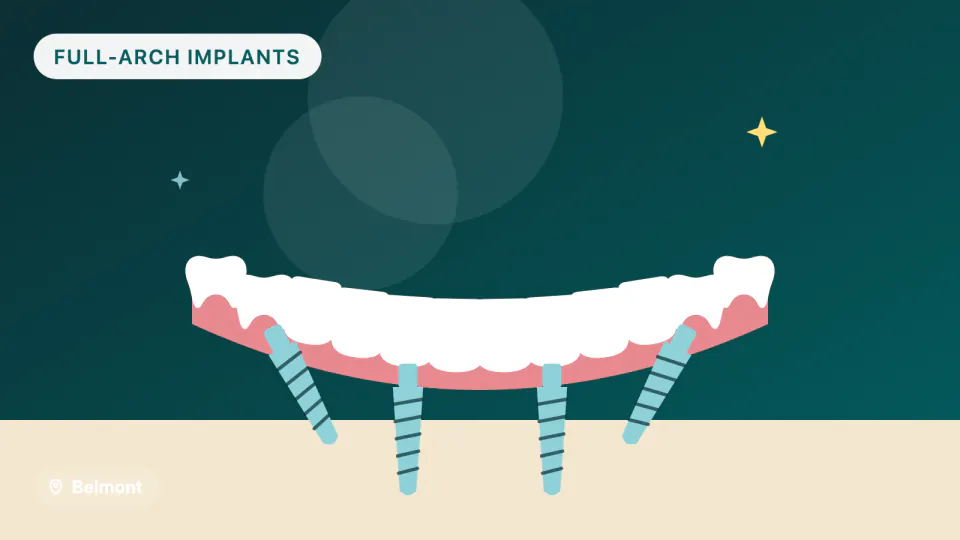
All-on-4 full-arch implants replace a full arch of missing or failing teeth with a fixed bridge supported by just four implants, moving from a same-day temporary bridge to a permanent one three to six months later once the jawbone has healed around the implants. Recent research has sharpened one decision that gets made before surgery ever starts: what the final bridge itself is made from, since that choice measurably affects how long it lasts and how the surrounding gum and bone hold up. For Belmont patients weighing this treatment, understanding the timeline and the material tradeoffs up front makes the whole process much less of a mystery.
The All-on-4 Timeline: From Consultation to Final Bridge
The process starts with a consultation and a 3D scan of the jaw, which lets your dentist at Carlmont Dental Care map out implant positions, check bone volume, and review health history factors — including smoking — that can affect healing. Many Belmont patients begin this process after looking into the best dentist in Belmont, CA for full-arch work and want a clear sense of what the months ahead actually look like.
On surgery day, four implants are placed per arch, often with the back two angled slightly to anchor into denser bone and avoid the need for a separate grafting procedure. A fixed temporary bridge is typically attached the same day or within a day or two, so patients are not left without teeth during healing. That healing period — generally three to six months — allows the implants to fuse with the bone (osseointegration) before the permanent bridge is fabricated and delivered. Because Belmont is a small, walkable city, appointments during this stretch tend to be quick trips: patients from Carlmont, Cipriani, or Belmont Heights are often within a few minutes' drive, or close enough to walk, for follow-up visits and adjustments to the temporary bridge.
Why the Bridge Material Gets Decided Early, Not at the End
Two materials dominate final All-on-4 bridges: a metal framework topped with acrylic teeth and gum-colored acrylic (a metal-acrylic hybrid), or a metal framework topped with zirconia. A 2026 pooled analysis combining roughly a dozen studies on complete-arch implant bridges found that metal-zirconia bridges showed substantially less wear over time than metal-acrylic hybrids, along with a meaningfully lower rate of peri-implantitis — inflammation and bone loss around the implants — and less marginal bone loss overall. Implant survival itself and the rate of the frameworks cracking were similar between the two materials in that analysis. It's worth being precise about what this does and doesn't show: the evidence comes mostly from observational studies rather than randomized trials, so it points to a consistent pattern rather than settled proof, but it's a strong enough signal that many prosthodontists now lean toward zirconia as a default recommendation for patients who can accommodate it.
A separate, much larger dental-lab analysis tracking roughly 3,300 monolithic zirconia complete-arch cases found about 92% were still functioning at the five-year mark. When these bridges did fail, a cracked or fractured framework was the leading cause — and it was closely tied to not having enough vertical space between the gum line and the bite for the zirconia to be made thick enough to hold up. That's exactly why your dentist plans bone reduction and bite spacing carefully during the surgical appointment itself, not as an afterthought once the final bridge is being designed. Getting that space right at the surgical stage is one of the clearest levers for how long a zirconia bridge will ultimately last.
What Actually Determines How Long the Implants Last
Separate from bridge material, the implants themselves have a strong track record. A multi-year study following several hundred implants placed under dozens of full-arch prostheses reported implant survival above 99% — but the small number of failures that did occur were disproportionately concentrated among patients who smoked. That lines up with what's broadly understood about smoking and implants generally: heavy smokers see noticeably lower survival than nonsmokers, largely due to reduced blood flow and slower healing around the implant site. Daily hygiene, regular checkups, and a nightguard if you grind your teeth all play a role too, but smoking status is one of the few factors patients can actively change before treatment that meaningfully shifts the odds in their favor.
Common questions about All-on-4 implants in Belmont
Q: How long does the entire All-on-4 process take from start to finish?Most patients move from consultation to a permanent bridge in roughly four to seven months, with the bulk of that time spent healing while wearing a fixed temporary bridge.
Q: Will I ever be without teeth during treatment?No — a fixed temporary bridge is generally placed the same day as surgery or within a day or two, so you're never sent home without a functioning set of teeth.
Q: Should I choose an acrylic or zirconia final bridge?It depends on your bite forces, available restorative space, and budget; your dentist will walk through the wear, maintenance, and longevity tradeoffs for your specific case at the planning appointment.
Q: What determines how much All-on-4 treatment costs?Cost varies with the number of implants needed, whether bone grafting or reduction is required, the bridge material chosen, and lab fees — we provide a written estimate after your consultation rather than a one-size-fits-all price. Carlmont Dental Care offers in-house membership plans starting at $30 a month for patients without dental insurance, and 0% APR financing through CareCredit or Proceed Finance to spread out the investment.
Q: Does smoking disqualify me from All-on-4?Not automatically, but it does raise the risk of implant failure, so your dentist will discuss it candidly as part of treatment planning.
If you're in Belmont, San Carlos, San Mateo, Redwood City, or a nearby community and want to know whether All-on-4 is the right fit for your situation, our team at Carlmont Dental Care is glad to walk through your scan, timeline, and material options in person. Call us at (650) 591-1984 or visit carlmontdentalcare.com to schedule a consultation — we serve patients throughout Belmont and the surrounding Peninsula, including families from Hallmark and Sterling Downs who've made the short trip to our Carlmont Drive office.
From our patients
★★★★★“Dr Jiang took over the practice from a corporate group that previously ran it. The corporate group was after money. I had three different dentists in three visits and the dentists didn't seem that interested. Dr Jiang is a breath of fresh air. I have had teeth cleanings, cavities filled, a crown and and an implant.”
★★★★★“Great people! Everyone smiled and made me feel good about coming here for my dental needs. Nancy helped me remove the Invisalign attachments, the whole process really felt like a family dental care, were very personable and caring, and worked with me as best they can to plan and resolve my crown problem.”